Showing posts with label rice cookers. Show all posts

Friday, February 19, 2010

Steamed Chinese Dumplings in the rice cooker

Hard not to love Cha Siu Bau; lovely chau siu pork filling and a light fluffy bun on the outside…perfect with on their own or even with a bit of soy sauce and chilli oil to dip…
PB290205
As for the rice cooker’s part in this culinary master-snack…fill the cooking bowl with 3 cups of water, place the buns in the steamer tray and use the “slow cook” function for 10-20minutes depending on whether they’re fresh or frozen, and then enjoy…
 PB290203
I use the “slow cook” function as it creates the fastest boiling water from which to steam…in addition to dumplings, you can steam anything and everything in the rice cooker.
For more information visit: www.cookjapan.co.uk

Sunday, February 14, 2010

Valentines Day in a Rice Cooker

If I could have worked out how to make crab terrine in a rice cooker it would have been a clean sweep, but as it was Mrs Cook Japan had to make do with 2 courses from my favourite appliance…risotto (her request) and a dessert of strawberry and rhubarb compote…
PC220325
…time for the sweetness later, with the terrine taken care off it was another run out for risotto in the rice cooker.  On the menu this evening was Asparagus and Mushroom Risotto…an absolute breeze and very tasty (although could have perhaps been a tad moister)…
PC220314
It really is so easy to cook risotto in a rice cooker…braise the shallots in oil and butter, add the rice and cook for a few minutes, then in goes the asparagus and mushrooms followed by chicken stock and pop the whole thing on the “Porridge” (or risotto setting depending on which machine) for 20-minutes and hey presto…
PC220315
The dessert was made this morning to save some time, then served chilled with good quality vanilla ice cream.  Again super easy in the rice cooker…first cook rhubarb with water and sugar for 20-minutes then add the strawberries and cook for a further 40-minutes or so…
PC210266
Incredibly simple, but a great dessert full of flavour and amazingly refreshing…
PC220320

Rice Cooker Ikameshi (Squid stuffed with rice)

For squid fans out there – why not try ikameshi (squid stuffed with glutinous rice)
PC210304
Its incredibly easy to do in the rice cooker, first up take a large squid and stuff it with glutinous rice (not to full, as the rice will expand), and we also added a few chopped up bits and pieces of squid, then close the end using a toothpick and pop them in the rice cooker…
             PC210267 PC210272
…along with sake, mirin, sugar and a pinch of salt and a little bit of soy sauce. We also put a piece of baking parchment over everything then popped it into the rice cooker for 30-minutes… 
PC210292
…plate up with the sauce that its been cooked in, you’ll probably find a fair bit of rice has eked out into the liquid but that’s fine and garnish with some spring onion and a bit of grated ginger…
PC210294
…or just slice it open on a plate and devour it…

For more information visit: www.cookjapan.co.ukPC210282

Saturday, February 13, 2010

Rice Cooker Slow Roasted Pork with Cabbage and Beans

Frugal freezing February – cheap, hearty warming food is most definitely on the menu this month…

PC170253

This is a very simple and very tasty dish – and a bit of a recession buster as well.  First up we cooked 2 pork fillet in early grey tea for about 45mins to tenderise the meat.  The water was then thrown away and the pork went into the rice cooker along with a whole cabbage (chopped) and a rinsed can of baked beans.  Rather than buying haricot beans or something similar, rinsing the tomato sauce of a can of baked beans was Mrs Cook Japan’s latest innovation.  For added flavour in went some left over stock from the previous days udon, soy sauce, mirin, sugar, salt and pepper, and a dash of Worcestershire sauce.    PC170251

Use the slow cook option on the rice cooker and once the cooking cycle is completed just leave it on keep warm until ready to serve.  Alongside some nice jacket potatoes, ‘twas a delight…

PC170250

Wednesday, February 10, 2010

Sausage and Chestnut Rice

PB250183
One of the joys of cooking in a rice cooker is the ease with which you can literally “dump” ingredients into the machine and come back later to a delicious meal.  This time in went shiitake mushrooms, chestnuts and some “sausage-meat-balls”, along with a dash of soy sauce…
PB250166
Admittedly making meatballs isn’t too difficult or time consuming, but why not just take some sausages, remove the casing, mix with soy sauce and a bit of seasoning then make into bite size meatballs?  If you are lucky enough to be able to get fresh chestnuts then use those, but equally easy is just using canned chestnuts…
PB250184   …delicious, simple and a joy to eat.
For more information visit: www.cookjapan.co.uk

Friday, January 15, 2010

Making Mochi

I have to put my hands up and admit I’m not a big fan of mochi (rice cake made of glutinous rice pounded into paste and molded), but it is a mainstay of Japanese cuisine and served in soup (ozoni) is a traditional aspect of New Year…
PB200158
So without entering into the mochitsuki ceremony how did we make mochi? (Well, when I say “we”, I mean Mrs Cook Japan and the 10 friends and countless children who had a great time making and eating it at our house.)
First up, mochigome (special glutinous rice for making mochi) was left to soak then wrapped in muslin and steamed in the Cook Japan rice cooker…
         PB200145PB200152
…and this is where the brilliant idea came into play…use a breadmaker!!!
Traditionally the rice is steamed then put into a huge mortar where it is a pounded to make a paste, whereas their plan was to put the rice into a breadmaker using the “dough” function and keep 20+ collective fingers crossed on the results….
…and what great results they were!  About 30-minutes in the breadmaker produced a wonderfully sticky paste that could be easily moulded then devoured…
            PB200148PB200157
And what a feast it turned into, never before have I seen so much mochi in one place.  Eaten with adzuki (red beans), natto (fermented soya beans), daikon oroshi (grated radish), kinako (soybean flour), and of course as ozoni, everyone had a whale of a time.
PB200146PB200151 PB200149    
So if you’ve got a breadmaker to hand, start steaming your rice and start making mochi!

For more information visit: www.cookjapan.co.uk

Thursday, January 14, 2010

Rice, Teriyaki Chicken, Burdock Root and (Eggy) Miso Soup

…yeah you read that right, “Burdock Root” (gobo).  Do you remember drinking dandelion and burdock as a kid, well this is the root it is made from… 

PB170132

We are really lucky because our friend Ikuko-san has a Japanese vegetable farm in Sussex so we can actually get fresh burdock root from her (by their very nature is a root fresh?).  At the top of the picture is kinpira gobo (braised burdock root – the thin one) with renkon (lotus root).  Alongside which is some lovely chunks of chicken in a teriyaki sauce and lightly tempura’ed leeks.

Alongside which was the obligatory bowl of Japanese rice…

PB170138

…and a light miso soup into which a poached egg was inserted – delicious!!  I can heartily recommend this combination for any lovers of miso and egg out there…

PB180142

Monday, January 11, 2010

French Onion Soup a la rice cooker

Pray tell, what could be easier…
PB170125
…first brown 3 onions in the Cook Japan rice cooker using the “braise function” (or do it in a pan if your machine does not have this option…
PB150112
…then add 4-cups of water into which you’ve dissolved 2tbsp of beef bouillon, a dash of Worcestershire sauce and a bit of salt…
PB150113
…set the “slow cook” function for around 3hours and come back to it later, when its had chance to sit a little longer on “keep warm” to intensify the flavour and voila…
PB170115
…top it off with a piece of cheesy toast and its a supremely easy way to cook a lovely heart-warming soup…
PB170125
For more information visit: www.cookjapan.co.uk

Thursday, January 7, 2010

Nanakusa-gayu (Seven herb porridge)

Eaten and drunk too much over the past couple of weeks?  Feeling a bit lardy, lethargic and lumpy?  Have a bowl of Nanakusa-gayu (seven herb porridge)…

727px-Nanakusa_gayu_on_Nanakusa_no_sekku

After indulging too much over ohshogatsu (new year), a long standing tradition in Japan is to eat nanakusa-gayu on 7th January.  Not only is it a simple low-calorie food after all that richness over the previous few days, but importantly it is believed to bring longevity and health, and also intended to ward off evil for the coming year.

The tricky bit if you’re not in Japan (where you can actually special packs at this time of year in the supermarket) is how to get the 7 herbs, traditionally (but with local variations):

  • seri – Japanese parsley
  • nazuna – Shepherd’s purse
  • gogyo – Jersey Cudweed
  • hakobera – Common chickweed
  • hotokenoza – nipplewort
  • suzuna – turnip
  • suzushiro - daikon

200px-The_seven_herbs

Your best bet is to therefore replace these greens with whatever locally available green leaf vegetables you can easily get hold of, and more importantly like.  So, armed with some lovely fresh greens how do you make this porridge?

Well, first things first, its not porridge in the western rolled oats sense of the world, this is an Asian rice porridge (in Japan referred to as okayu – but not much different from what you would find in China as congee or similar dishes elsewhere throughout SE Asia). 

In a rice cooker its an absolute breeze to make…

…wash the rice thoroughly, then put 1 cup of rice into the rice cooker with 7 cups of water, press “Congee” and leave the rice to cook.  Probably takes about 40-minutes or so and then it will have a nice porridge consistency (see top photo).  At this point ,add your chopped greens and leave it on “Keep Warm” for a few minutes – but not too long as you don’t want everything to wilt too much.  Add a little bit of salt and serve…how easy is that!

Wednesday, December 16, 2009

Eintopf (German one pot stew)

Following a chat about food with two German chums, Helge and Lasse, we thought we should try making Eintopf  in the Cook Japan rice cooker:
CIMG1581
For those new to this dish, that includes Cook Japan until 48-hours ago, Eintopf means literally “one pot” and is a traditional type of German stew which can consist of a great number of different ingredients. Technically, the term refers to a way of cooking all ingredients in one pot, not to any specific recipe.
Not knowing quite where to start we therefore followed Lasse’s lead and opted for the following recipe which we cooked with the “soup” mode (plus a bit of braising)…
…first up braise some bacon and German sausage in the rice cooker, once browned put this to one side, switch to “soup” and get on with the liquid component of dinner.  In this case, we used peas, leeks, carrots, celery, potatoes, bay leaf, onion, some bouillon and seasoning.  Once the soup was underway, the sausages and bacon were re-added to the rice cooker and left to cook…
CIMG1580
Once cooked the dish sits quite happily on “keep warm” intensifying flavours until ready to be devoured by very cold hordes at dinner time…and the best thing is there just enough for a very small cold horder to eat some more tomorrow!
CIMG1581v2
As with many great dishes this is Eintopf is about using ingredients to hand rather than rigidly sticking to a recipe, this was our first experiment and according to our German friends not a bad start either.
For more information visit: www.cookjapan.co.uk

Tuesday, December 1, 2009

Slow Cooked Pork (in the Rice Cooker)

This is a slight variation of a firm Cook Japan family favourite…buta no kakuni (Japanese braised pork belly).  Mrs Cook Japan is loving our local supermarket’s so called “forgotten cuts”, in this case pork cheeks… 

PA060033

…so it was still pork, just that it happened to be cheeks and not belly…I have to say if you are a fan of slow cooking pork cheeks are a wonderful cut of meat for this type of dish with a fabulous texture.

So the recipe…Mrs Cook Japan’s secret  is to cook the meat in earl grey tea for 1-1.5 hours until it is really tender, she then changes this to fresh water and adds ginger, garlic,dried lily flowers and daikon (long white Japanese radish) along with soya sauce, mirin, sake and sugar which gives the dish its lovely sweet syrupiness.  The whole thing is put in the rice cooker and left to cook for a couple of hours, after which a few spring onions and leeks go in and everything is left on “keep warm” until its time to eat.

PA050231

One of the great things about this dish is the way the daikon soaks up the sauce, creating this wonderful marbling effect and making it absolutely delicious…

PA050233

The finished pork just falls apart on your fork/chopsticks, the tenderness of the meat and flavour is superb and only increases with time (especially if there’s some left for the following day). 

PA060029

Served on a bed of rice (thankfully we have 2 rice cookers for when it comes to making meals like this), the only drawback was having friends pop round…once they’d had a bowl as well it meant was nothing left for me reheat tomorrow…

Saturday, November 28, 2009

RICE COOKERS are BACK IN STOCK

banner There is nothing more disappointing than realising that the rice on the stove is burnt or worse still has turned into a gooey mess.  For so many people, the task of making rice is one fraught with difficulty and despairing hope…

…but help is at hand with a Rice Cooker from Cook Japan – http://www.cookjapan.co.uk 

With a rice cooker it doesn’t have to be this way…in Japan, and elsewhere across Asia, a simple-to-use hi-tech computer controlled rice cooker is a sight in every kitchen, ensuring perfect rice at the push of a button every time…


…and not only can they cook perfect rice, but rice cookers from the Cook Japan shop can also be used as a slow-cooker or steamer, to make porridge, congee, soup, and also to braise. This makes it a great multi-purpose rice cooker so there’s really no limit to what you can make. In fact, Cook Japan rice cookers have the functionality and fuzzy logic technology you would expect to find in a Japanese rice cooker:

rice cookers

So does it do anything else?

Well, not only do Cook Japan rice cookers make great rice, with their range of other cooking functions and programmes, a 24-hour timer, and automatically switching to “keep warm” when the cooking cycle is finished, there is no limit to what you can cook. Some of our most recent dishes have included:

For more recipes and to see some of the culinary fun we have with our rice cooker read the rest of the blog or visit: http://www.cookjapan.co.uk/article/rice_cooker_recipes

Oh and with Christmas coming, you can even make mulled wine in your rice cooker!


“So, how does it work then?” I hear you ask, well…

…by using computer controlled technology, commonly referred to as fuzzy logic, the rice cooker is able to make adjustments to both temperature and cooking time to cook perfect rice, for example if the rice is too hot and heating too quickly the heating element will be turned down slightly to balance this.  With fuzzy logic the cooking process is improved in 3 key ways:
  1. The temperature sensor control is more accurate and can therefore allow for fine adjustments to the cooking temperature
  2. The heat distribution and conduction around the entire bowl produces more evenly cooked food
  3. The computer can instantly strengthen or weaken the heat ensuring a controlled cooking process
For more information about rice cookers and how to use them, please visit www.cookjapan.co.uk
Thanks, now, I’m off to make some rice…

Friday, November 27, 2009

Risotto alla Milanese (in the Rice Cooker)

To celebrate Cook Japan’s little sister getting a new job, I thought I’d invite her round for one of her favourites dishes…Risotto alla Milanese…
PA030206
This is a famous Milanese version of risotto cooked with saffron.  The think is, I’ve never cooked risotto before in my life…so given that I also invited my risotto-cooking cousin as well it was a real gamble hoping that I could pull this meal off…
…but before I even started worrying about risotto I’d also decided to make a raft of antipasti dishes to get the dinner started.
PA030200
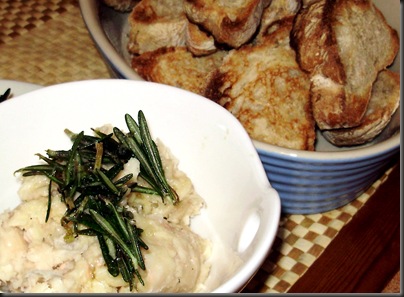
So along with some olives, artichokes, sun dried tomatoes and Italian meats from the shops, I also opted to make a variety of toppings for some crostini.  First up was grilled vegetables (easy), followed by a cannellini bean and garlic puree that was then topped with rosemary infused olive oil…
PA030204
We also tucked into some porcini mushrooms grilled with herbs and mozzarella…
PA030199
…and some lemons stuffed with mozzarella, basil, anchovy fillets and sun dried tomatoes which were really yummy!
 PA030197
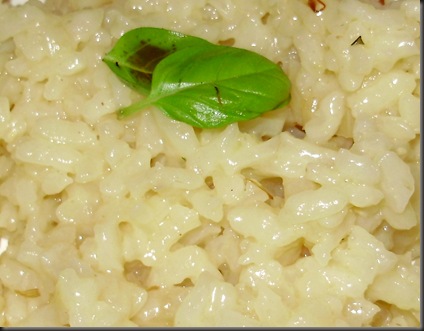
So with all that taken care, it was down to the pièce de résistance…my first time at the hands of a pot of risotto, but this was not any old risotto, it was a double first as it was cooked in my trusty Cook Japan rice cooker!
First up, chopped shallots were braised in butter and olive oil then in went the Arborio rice which was cooked until translucent along with the wine…
PA030195
…all that was left was to add the saffron infused stock and the remaining stock, switch the rice cooker to “porridge” mode and tuck into the rest of the food while we waited.
No need to constantly stir the risotto and pay attention to the stove, instead after 20-minutes it switched to “keep warm” so in went some more butter then just before serving a pile of grated parmesan to finish the dish off….
PA030219
…of course I’m biased, but I thought it was really nice and more importantly my sister who lived for a few years in Milan, where she got her love for the dish, though it was great. 
So next time you want to make risotto do it in the rice cooker! 
For more information visit: www.cookjapan.co.uk
Risotto Alla Milanese on Foodista